ProcureCortex vs ChatGPT
ChatGPT suits a team that wants a quick first read of a long vendor document: upload the SOC 2 report or DPA, ask what it says about exceptions, subservice organisations or breach notice, and get a plain-language answer in seconds. ProcureCortex suits a team that has to show how each vendor decision was reached, with every framework requirement and policy rule checked against the vendor’s documents, each finding carrying its excerpt and page, and a reviewer’s acceptance or override kept with its reason.
Checked against the sources listed below on 24 November 2026.
Which one fits.
The short version, before the detail. Both lists are written to be true for the buyer they describe.
Choose ProcureCortex if
- You assess enough vendors that every review must run the same checks against the same frameworks and policies, whoever runs it and whenever.
- Every finding must show its rule, the vendor’s excerpt and its page, so an auditor can trace a decision without re-reading the document.
- A reviewer’s acceptance or override, its reason, and a compliance officer’s second sign-off for critical vendors must stay with the assessment, not in a chat.
Choose ChatGPT if
- You review a handful of vendors a year and want a fast first read of a long SOC 2 report or DPA before a person reads the parts that matter.
- Your team already uses ChatGPT Business or Enterprise, and one assistant for drafting, summarising and answering questions is worth more to you than a dedicated vendor review tool.
- You need to ask open questions no checklist foresaw, such as what a continuity plan says about one region, and you already keep the record of each decision somewhere else.
Using both
Many teams start here. Keep it for what it does well, and move the vendors whose tier calls for a document review into ProcureCortex, where each finding keeps its evidence and each decision keeps its reason.
What each one does.
What a team gets without building extra process around ChatGPT. Where the do-it-yourself route is the better option, the table says so.
| Capability | ProcureCortex | ChatGPT |
|---|---|---|
| Reads the vendor’s own documents: SOC 2 reports, DPAs, MSAs, policies | Core to the product | Core to the product |
| Checks them against your own internal policies | Core to the product | Partly, or depends on plan or integration |
| Shows the evidence excerpt and page behind every finding | Core to the product | Partly, or depends on plan or integration |
| A reviewer accepts or overrides, and the reason is recorded | Core to the product | Not its focus |
| Intake questions set the vendor’s tier and the documents to request | Core to the product | Not its focus |
| Creates a Jira task from a finding, with its evidence | Core to the product | Partly, or depends on plan or integration |
| Rates the vendor from signals outside the vendor, over time | Not its focus | Not its focus |
| Sends questionnaires for the vendor to complete | Not its focus | Not its focus |
Core to the productCore to the productPartly, or depends on plan or integrationPartly, or depends on plan or integrationNot its focusNot its focus
Where they differ.
The differences that decide the choice between ProcureCortex and ChatGPT.
A general assistant or a review built for vendors
ChatGPT is OpenAI’s general-purpose assistant. You can upload PDF, DOCX and other documents of up to 512 MB each, capped at 2 million tokens of text per file, and ask questions about them. Projects keep files, instructions and chats together, with up to 40 files per project on Business and Enterprise. What gets checked depends on what you ask, so a review is only as complete as its prompts. ProcureCortex starts from the vendor: a short intake sets its tier, the tier sets the documents, frameworks and depth of review, and each assessment runs the requirements of its chosen frameworks and the rules drawn from your own policies.
An answer or a finding
Ask ChatGPT whether a SOC 2 report lists exceptions and it answers in prose. OpenAI’s help centre says ChatGPT can produce incorrect or misleading outputs, may sound confident when it is wrong, and should be used as a first draft, not a final source, with quotes and references to documents always verified. Its release notes describe following citations back to the source for files added from Library, but the pages we read do not promise a page reference for every answer, and asking again can bring a differently worded or weighted answer. A ProcureCortex finding names its rule, severity and confidence and carries the vendor’s excerpt and its page, and policy rules are marked met, partly met or missing.
A chat, or a review record
A ChatGPT conversation keeps what was asked and answered. It does not record that a reviewer accepted or rejected a point, why, or who signed off, unless someone writes that into the chat or another system. On business plans the conversation follows workspace settings: OpenAI’s enterprise privacy page says admins control retention on ChatGPT Business, Enterprise and Edu customers control how long their data is kept, and deleted conversations are removed within 30 days unless the law requires otherwise. In ProcureCortex a reviewer accepts or overrides each finding, an override needs a reason that stays next to the original result, and critical and high-tier vendors can require a compliance officer’s second sign-off.
What happens after the review
ChatGPT can reach Jira through the Atlassian Rovo connector, which OpenAI added in December 2025 for Enterprise, Edu, Business, Pro and Plus customers. OpenAI says it can take supported write actions in Jira, such as creating issues, initiated and approved in the chat, so the issue holds whatever evidence you ask it to include. ProcureCortex sends selected findings to Jira Cloud as issues carrying their evidence, rolls findings up into a vendor profile and a portfolio view across privacy, security, anti-bribery, ESG and financial risk, and records the framework version each assessment ran against, so the team can re-run affected vendors when a framework changes.
At a glance.
Where each one starts, and the question it answers.
| Compared | ChatGPT | ProcureCortex |
|---|---|---|
| Category | General-purpose AI assistant | Vendor risk assessment from vendor documents |
| Starts from | Vendor documents a team uploads to a chat or project, read by a general-purpose AI assistant in answer to the questions the team types. | The documents the vendor sends: SOC 2 reports, DPAs, MSAs, policies, continuity plans and financial statements. |
| Answers the question | What does this document say about the points we thought to ask? | Do this vendor’s own documents meet our frameworks and our own policies? |
| What a reviewer gets | Answers in conversation to the questions you type about each uploaded document, which a reviewer checks against the document and records elsewhere. | Findings that each name their rule and carry an evidence excerpt, its page and a confidence. |
Comparisons are based on public information as of November 2026 and may change. Product names and logos belong to their owners. If anything here is out of date, write to info@procurecortex.com and we will correct it.
Questions to ask before you choose.
Answer these for your own programme. They show whether ChatGPT will still hold up as the number of vendors grows.
How many vendors will we review this year, and how many of them handle personal data or support critical services?
If an auditor asks why a vendor was approved, where is the record of what was checked, what was found, and who accepted it?
Will two reviewers looking at the same vendor run the same checks against the same frameworks and policies?
Do our agreements with vendors allow their SOC 2 reports to be uploaded to the tool we choose, and do its data processing terms cover them?
How ProcureCortex approaches it.
Whatever else you use alongside ChatGPT, this is what a ProcureCortex assessment does with a vendor’s documents.
- Reads what the vendor sentSOC 2 reports, DPAs, MSAs and policies are checked against the frameworks you select and your own policies.
- Shows its workingEvery finding names its rule and carries the evidence excerpt, its page and a confidence.
- A reviewer decidesAccept or override. An override needs a reason, and the reason stays on the record.
- Hands off the fixAny finding can become a Jira task, with its evidence attached.
Breach notification window of 72 hours exceeds the contractual 24 hours
Northstar policy · Third-Party Security Standard §11Your Third-Party Security Standard requires notice within 24 hours. The MSA commits to 72 hours.
“Supplier will notify Customer of a Security Incident within seventy-two (72) hours of becoming aware of it.”
MSA_Atlas_Logistics_signed.pdf p. 14Use it with.
Templates, regulations and tools that go with this one.
Vendor risk assessment template
A working spreadsheet for one vendor review: the vendor profile, a four-question tiering score, the documents to request for that tier, a findings log with evidence and reviewer decisions, and the sign-off.
See the templateXLSX · 28 checksSOC 2 report review checklist
28 checks for reading a vendor's SOC 2 report: the opinion, the period, the scope, subservice organisations, complementary user entity controls, exceptions and the bridge letter, with where to find each in the report.
See the templateFree tool · runs in your browserVendor tier calculator
Four intake questions give the inherent risk, the tier, the frameworks in scope and the documents to request.
Open the toolOther comparisons.
More tools buyers weigh against ProcureCortex.
All comparisons-
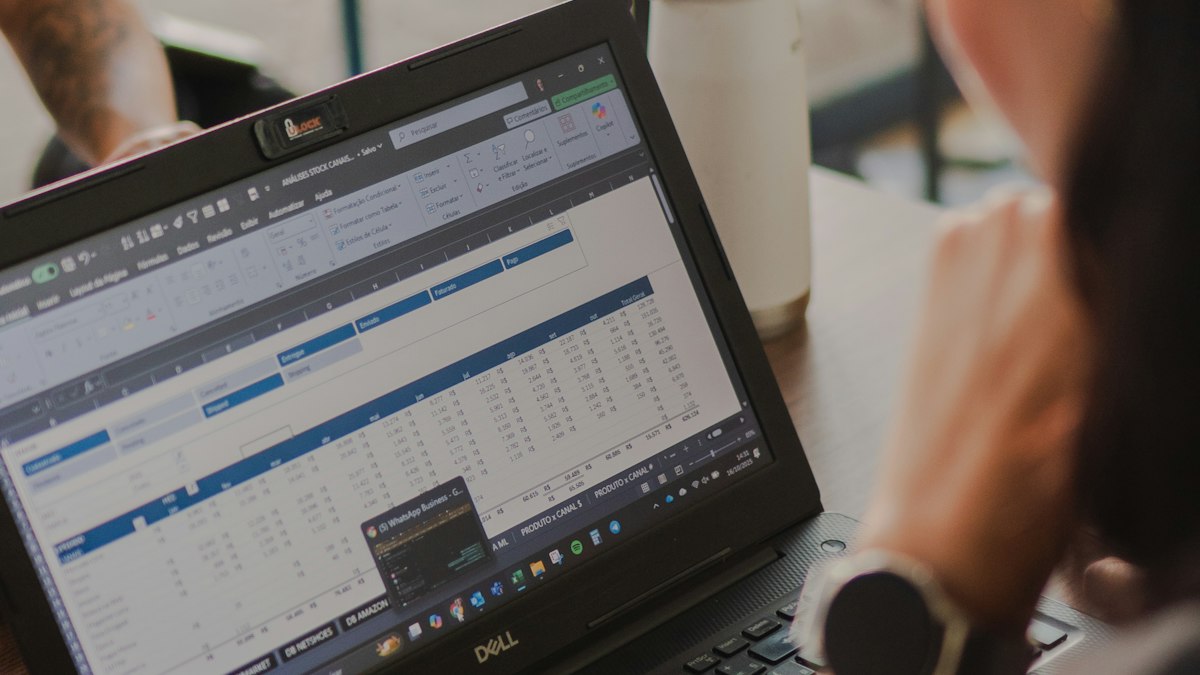
ProcureCortex vs Spreadsheets
Do-it-yourself tracker in Excel or Google Sheets
A do-it-yourself vendor risk tracker in Excel or Google Sheets, where a team records vendors, questionnaires, document reviews and decisions in rows and tabs it designs itself.
-

ProcureCortex vs UpGuard
Security ratings, questionnaires and AI document analysis
A security ratings and vendor risk product that adds questionnaires and AI analysis of vendor security documents.
-

ProcureCortex vs SecurityScorecard
Security ratings and third-party risk platform
A security ratings company whose third-party risk platform adds AI-checked questionnaires, SOC 2 gap analysis and a managed service.


See it on your own vendor documents.
Open a demo workspace with a sample vendor, its documents and its findings. Or bring your own vendor to a 30-minute call.
ProcureCortex vs ChatGPT: questions
Short answers to what buyers ask before a demo. Anything else, ask us directly.
ProcureCortex publishes this page, and we sell the product being compared with ChatGPT, so read it with that in mind. Statements about ChatGPT come only from OpenAI’s own help centre and product pages, listed under Sources, as read on 24 November 2026. OpenAI changes ChatGPT’s plans and features often, so check the current pages before you decide. To correct anything here, write to info@procurecortex.com and we will update the page.
It can read one. OpenAI’s help centre lists PDF and DOCX among supported uploads, with documents of up to 512 MB and 2 million tokens per file, so most SOC 2 reports fit. It will summarise the report, answer questions about the auditor’s opinion, exceptions or subservice organisations, and compare it with other documents you upload. What it checks is set by your questions, and OpenAI advises verifying quotes and references to documents, so a reviewer still confirms each point in the report before relying on it.
Yes. A first read in ChatGPT is a reasonable way to get the shape of a long report or contract before the formal review. The record of the decision has to live somewhere, though: which requirements were checked, what the vendor’s documents said and on which page, and who accepted the result. In ProcureCortex that record is the assessment itself. ProcureCortex’s pages describe no integration with ChatGPT, so nothing passes between the two automatically.
That depends on your plan and on your agreements with each vendor. OpenAI’s enterprise privacy page says that for ChatGPT Business, ChatGPT Enterprise, ChatGPT for Healthcare, ChatGPT Edu, ChatGPT for Teachers and its API Platform, it does not train its models on your data by default, you own your inputs and outputs where the law allows, data is encrypted at rest with AES-256 and in transit with TLS 1.2 or higher, and it can sign a Data Processing Addendum for Business, Enterprise and the API. Vendors often share SOC 2 reports under a non-disclosure agreement, so check that agreement before uploading one to any outside service, ProcureCortex included.
A great deal. ProcureCortex answers one question, whether a vendor’s documents meet your frameworks and your own policies. It does not draft emails, summarise meeting notes or answer general questions, and its only integration is Jira Cloud. ChatGPT is a general assistant for all of that, and OpenAI’s connected apps page lists connections to tools such as Google Drive, SharePoint, Slack, GitHub and Notion, with availability depending on plan, region and workspace.
Sources
What this page says about ChatGPT rests on these pages, read on the date shown. What it says about ProcureCortex is on this site.
- Uploading files and audio to ChatGPT | OpenAI Help Centerhelp.openai.com · read 24 November 2026
- Projects in ChatGPT | OpenAI Help Centerhelp.openai.com · read 24 November 2026
- Does ChatGPT tell the truth? | OpenAI Help Centerhelp.openai.com · read 24 November 2026
- ChatGPT release notes | OpenAI Help Centerhelp.openai.com · read 24 November 2026
- Enterprise privacy at OpenAIopenai.com · read 24 November 2026
- Chat and file retention in ChatGPT | OpenAI Help Centerhelp.openai.com · read 24 November 2026
- ChatGPT Enterprise and Edu release notes | OpenAI Help Centerhelp.openai.com · read 24 November 2026
- Connected apps in ChatGPT | OpenAI Help Centerhelp.openai.com · read 24 November 2026
- Business Pricing | OpenAIopenai.com · read 24 November 2026
Comparisons are based on public information as of November 2026 and may change. Product names and logos belong to their owners. If anything here is out of date, write to info@procurecortex.com and we will correct it.